You are on: Home Picking sellers
Vetting a seller, a find and the catalogue that listed it
Three things stand between you and a disappointing parcel: the catalogue that pointed you to a listing, the seller behind the listing, and the agent that buys from the seller. Here is how we judge each one, with examples from the thirty listings on this site.
Tests a catalogue website ought to pass
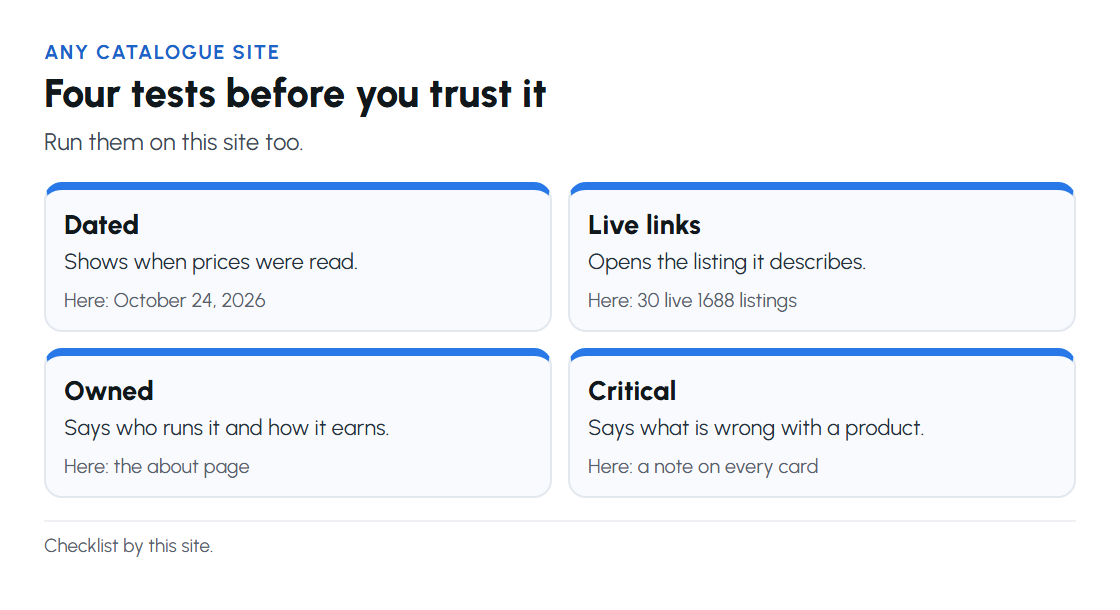
A catalogue site is only as useful as its upkeep. Before trusting one, including this one, check four things. Does it show a date when its prices were read? Do its links open the listing they describe, or a dead page? Does it say who is behind it and where its income comes from? And will it ever criticise a product it lists? A catalogue where every item is "top quality" has not looked closely.
Hold us to the same test. Every card here carries a read date of October 24, 2026, a link to a live 1688 listing inside Whalebuy, the seller's own season tags beside our reading, and at least one note on what is wrong or unclear with the listing. Our about page explains who keeps the catalogue and how links are tagged.
How to choose a seller on 1688
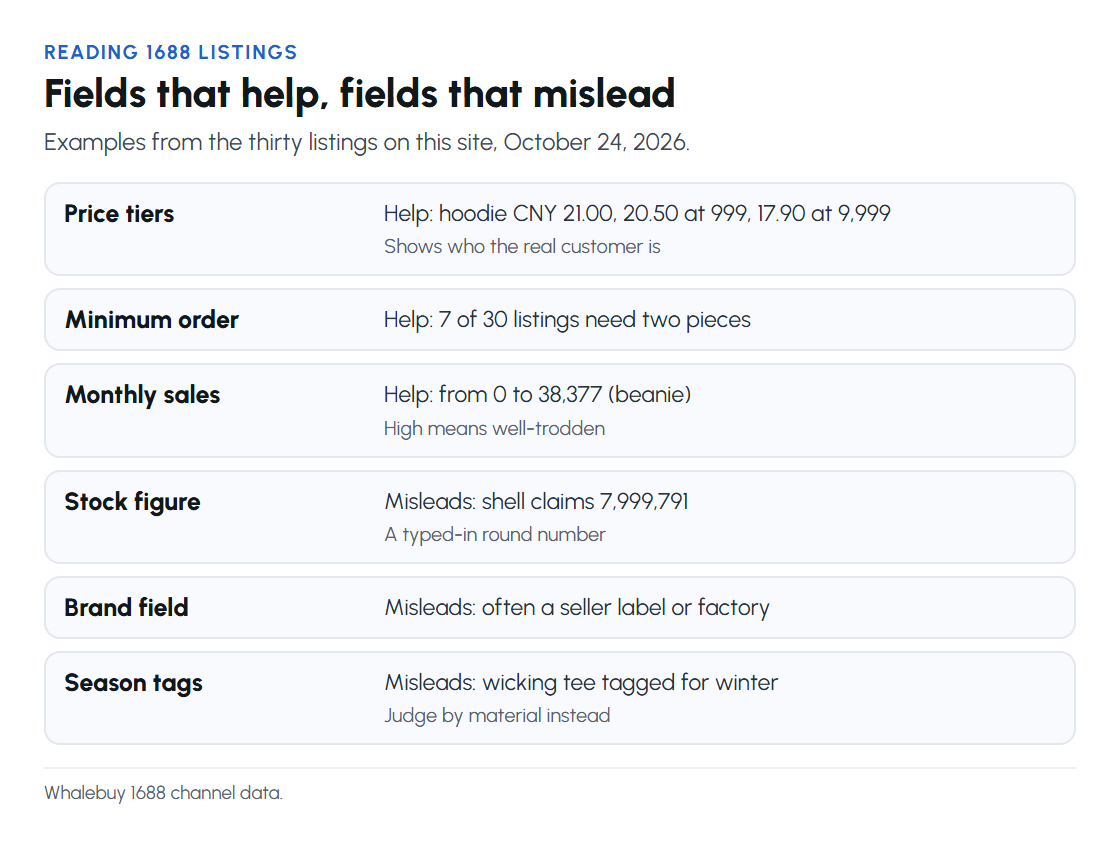
1688 is Alibaba's wholesale marketplace, and its listings read differently from retail ones. Look first at the price tiers: the sherpa hoodie drops from CNY 21.00 to 20.50 at 999 pieces and 17.90 at 9,999, a reminder that the seller's real customer is a shop. Then the minimum order: seven of our listings will not sell a single piece. Then monthly sales, which range on our shelves from zero to 38,377 for the beanie; high numbers suggest a well-trodden product, low ones a new or niche listing.
Two fields mislead. The stock figure is often a round number the seller typed in; the rain shell claims 7,999,791 pieces. And the brand field frequently holds the seller's own label or a factory name rather than a brand you would know. Read the attribute form for composition and the option menus for surprises, and treat factory slogans in the photos, such as "source factory", as decoration.
Trust signals for a buying agent
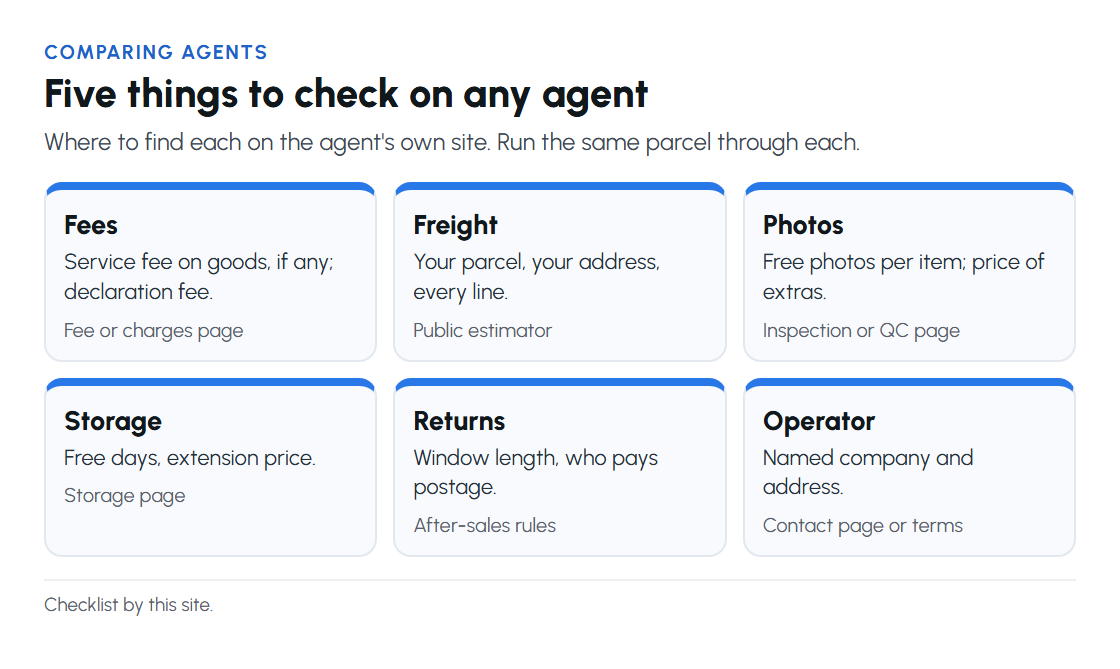
Because an agent sits on your money and your parcels for weeks, trust deserves a proper check. Check that a company name and an address stand behind it; Whalebuy names XINGKUN TRADING CO., LIMITED. Look for fees written down before you pay, not after, and for a public estimator. Look at how it handles contradictions in its own help centre, and at what it says about counterfeit goods: Whalebuy publishes an anti-counterfeiting policy under which it may refuse orders and suspend accounts.
Then start with a trial. Two or three cheap items in one opening order, ideally from different sellers, shows you the photo quality, the response time on Consult and the real freight to your door. If any of those disappoint, you have lost little. If they are fine, scale up the next parcel.
How to choose a product for your climate
Start from the weather, not the item. Name the condition that bothers you most, open that shelf, and read the notes before the prices. Then compare the item's material with the condition: polyester and nylon for wet heat, a sealed shell for rain, fleece or real fill for cold, closures for wind. Seller season tags are not a guide; the bucket hat on our downpour shelf is tagged for all four seasons, and the wicking tee is tagged for winter.
Size is the next filter. A jin weighs half a kilogram, and many listings size clothes by body weight in jin; the cardigan fits 80 to 125 jin, about 40 to 63 kg. Chest figures in Chinese size charts are often measured flat across, so double them before comparing with your own chest.

Season-wasting mistakes
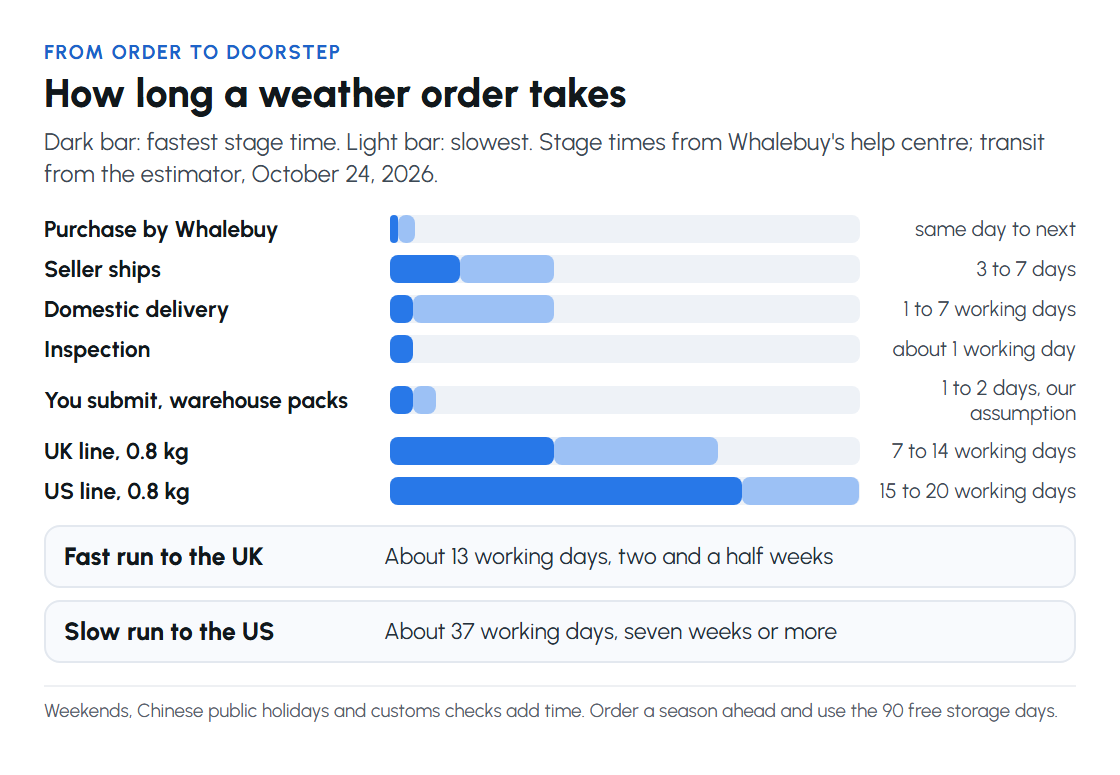
The costliest errors on this kind of order are about timing and bulk, not quality. Ordering a winter coat in November means it may arrive in January. Shipping three fleece pieces loose can double the freight. Mixing a battery fan into a clothing parcel can knock out the cheapest lines. Each of these is avoidable with a little planning.
- Order a season ahead and let the free 90-day storage hold early buys.
- Ask for a vacuum bag on any parcel with fleece, padding or knitwear.
- Keep batteries and liquids out of clothing parcels unless the line accepts them.
- Read every option in a menu before choosing; seven of our thirty listings sell something other than a colour there.
- Check inspection photos on the day they arrive; the return window is 120 hours.