
You are on: Home Weather shelves
Your climate decides which Whalebuy shelf to open
Five readings cover most of the weather people order for: muggy heat, glare, downpour, dry cold and gusts. Pick the one you dress against most often, then check the lead time, because a parcel from China takes weeks and the forecast will not wait.
Five readings and the gear each one wears out
Each reading names a kind of weather by what it does to clothes, not by a month. Muggy air rots cheap elastic and tarnishes plating; glare fades dyes; rain finds every unsealed seam; dry cold cracks leather and builds static; wind lifts anything loose.
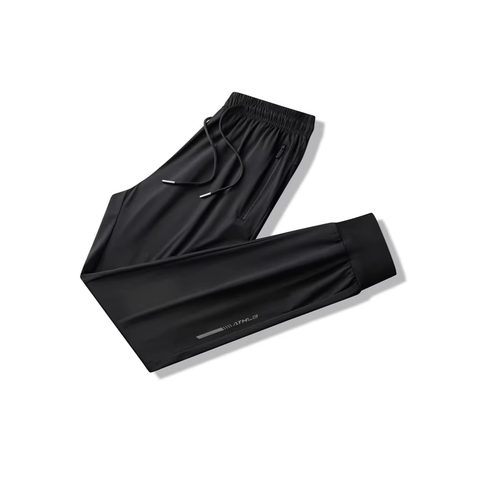 Muggy heatSticky air above 25 °C, sweat that never dries.Wicking tees, ice-silk joggers, steel chains
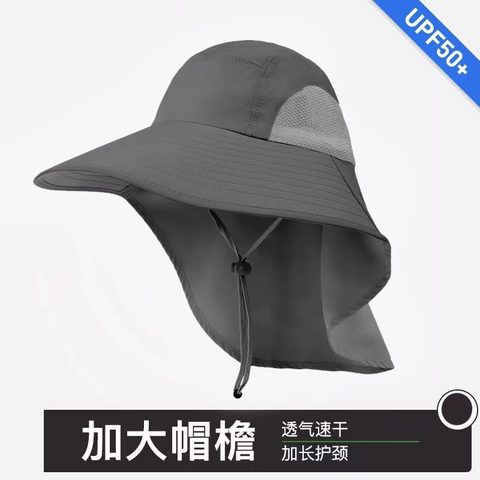 GlareDry, bright days where shade matters more than airflow.Brimmed hats, clip-on lenses, linen
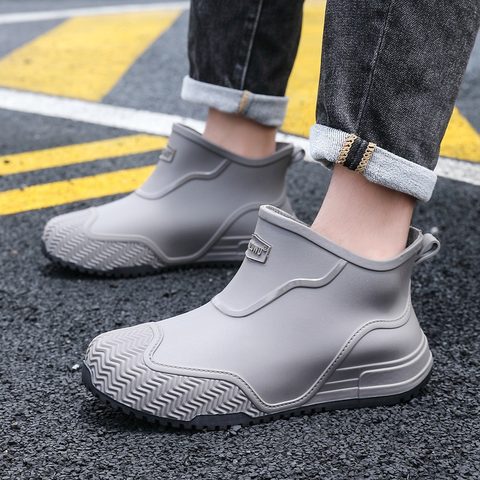 DownpourRain that soaks through cotton in minutes.Shells, ankle boots, roll-top bags
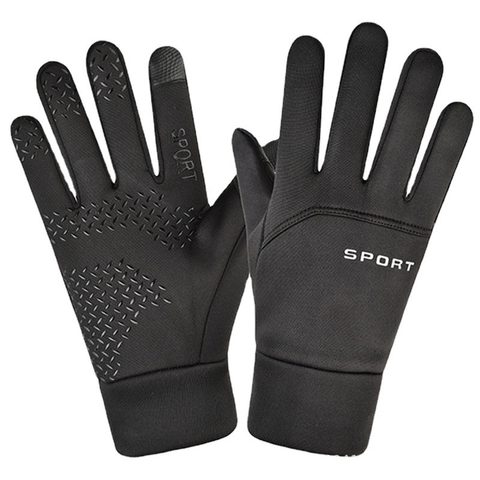 Dry coldClear frost, low humidity, static on every jumper.Sherpa hoodies, lined jeans, knit hats
 GustsShoulder-season wind that turns a mild day raw.Windbreakers, gaiters, strapped caps
Lead time: the sky changes while the parcel travels
Whalebuy publishes the stages and roughly how long each takes. Orders paid during Beijing office hours, 08:00 to 18:00, are bought within six hours; evening orders are handled before 2 pm the next day. Taobao sellers usually ship in three to seven days, longer for made-to-order goods. Goods posted in Guangdong's Pearl River Delta reach the warehouse in a day or two; the Shanghai and Zhejiang belt needs three to five working days, and far provinces around a week. Inspection adds about one working day.
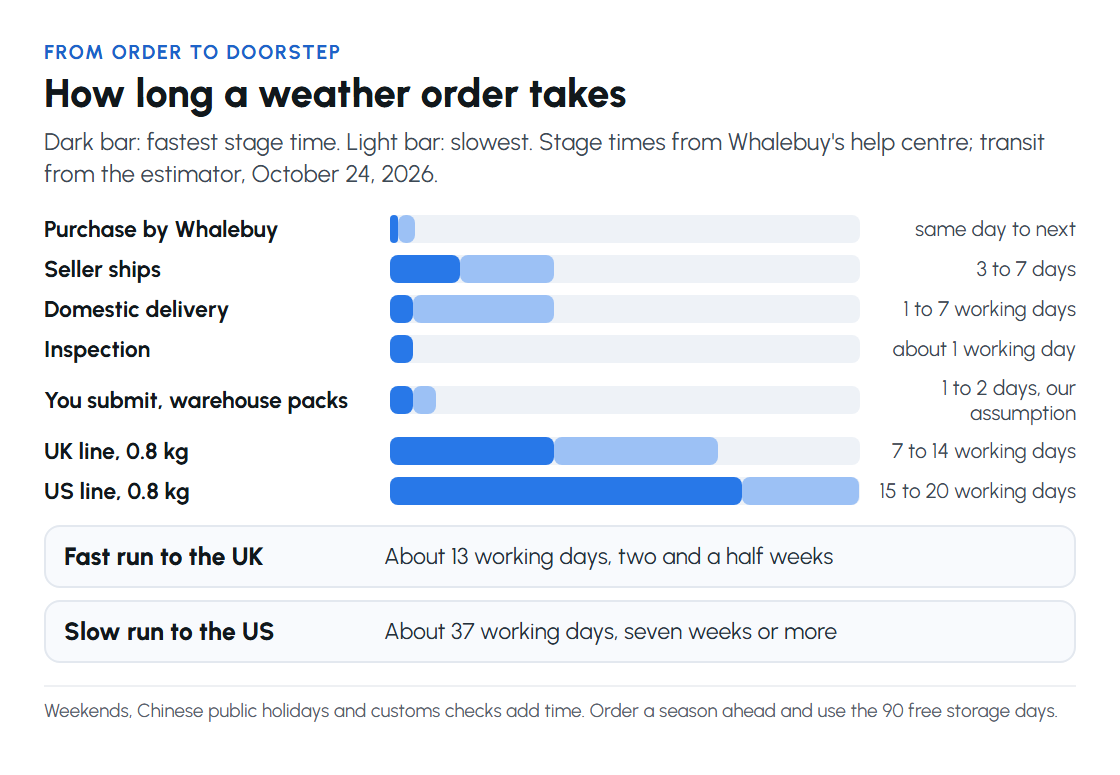
Then the international leg. The estimator gave seven to fourteen working days on the lowest UK line and fifteen to twenty on the lowest US line for a light summer parcel. Add it up and a fast run lands in about two and a half weeks; a slow seller in a remote province plus a slow line stretches to seven weeks or more. That is why each shelf page suggests ordering a season ahead, and why the storage clock matters: Whalebuy holds stocked goods free for 90 days, so you can buy early and ship late.
Climates that sit between two readings
Real places rarely fit one reading. A British November is downpour and gusts at once. A Texas August is muggy before noon and glare after it. A Canadian prairie January is dry cold, while a Dutch January is closer to downpour with frost. Treat the readings as building blocks: pick the one that hurts most, then borrow one item from the next.
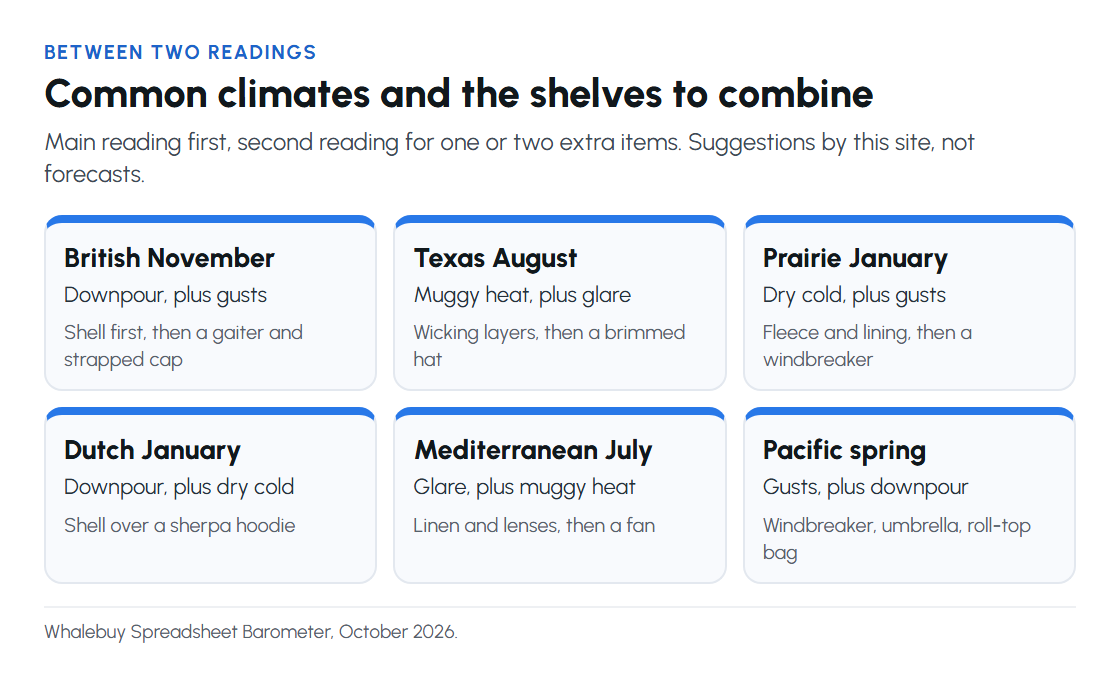
Mixing readings in one parcel is fine, but mind the bulk. A muggy-season tee folds to almost nothing; a sherpa hoodie does not. If you combine a dry-cold item with summer things, ask for the vacuum bag so the hoodie does not set the price for the whole box.
Weight and bulk by reading
We priced four parcel profiles that stand in for the readings: a light summer box (0.8 kg, 30 by 22 by 6 cm), a rain kit (1.8 kg, 38 by 28 by 14 cm), a loose winter box (2.6 kg, 50 by 40 by 25 cm) and the same winter box compressed (2.6 kg, 40 by 30 by 12 cm). Lines in the table are the lowest carriable quote per profile on October 24, 2026.
| Destination | Summer 0.8 kg | Rain kit 1.8 kg | Winter, compressed | Winter, loose |
|---|---|---|---|---|
| United Kingdom | 18.37 | 35.01 | 45.60 | 108.34 |
| Germany | 22.96 | 41.32 | 53.00 | 107.56 |
| Poland | 24.93 | 41.78 | 52.50 | 108.74 |
| Australia | 21.75 | 38.18 | 48.35 | 102.09 |
| Canada | 28.17 | 51.57 | 66.47 | 145.20 |
| United States | 30.63 | 60.24 | 79.08 | 241.88 |
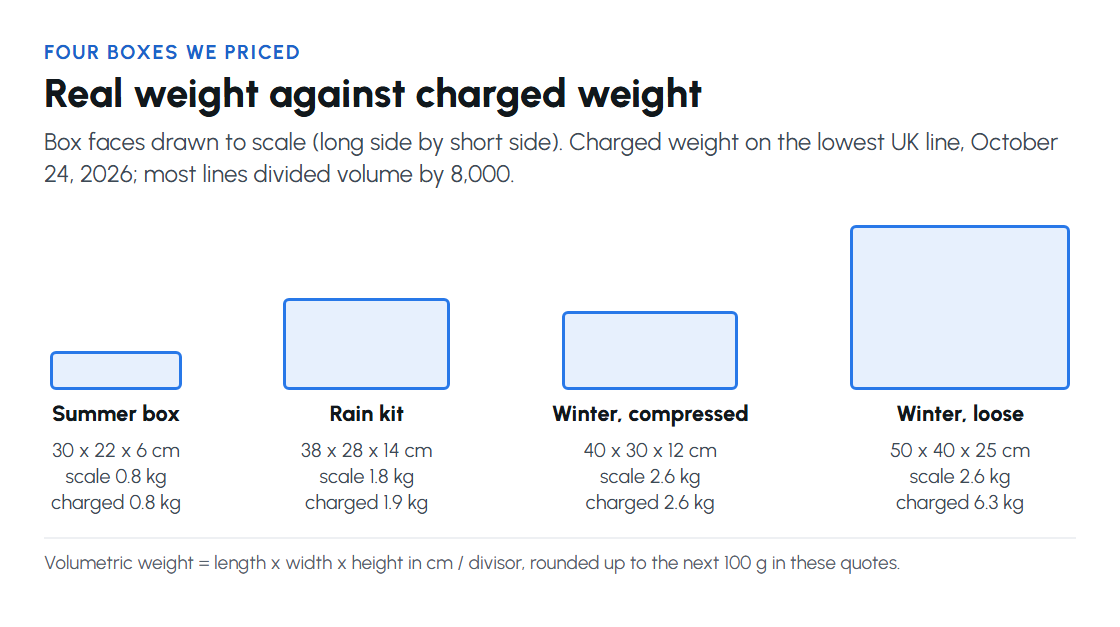
The compressed box was charged at its true 2.6 kg because its size worked out at 1.8 kg. The loose box was charged at 6.3 kg everywhere except the US, where only UPS-based lines accepted it and their express versions billed it at 8.5 to 12 kg. More on this on costs and parcels.